
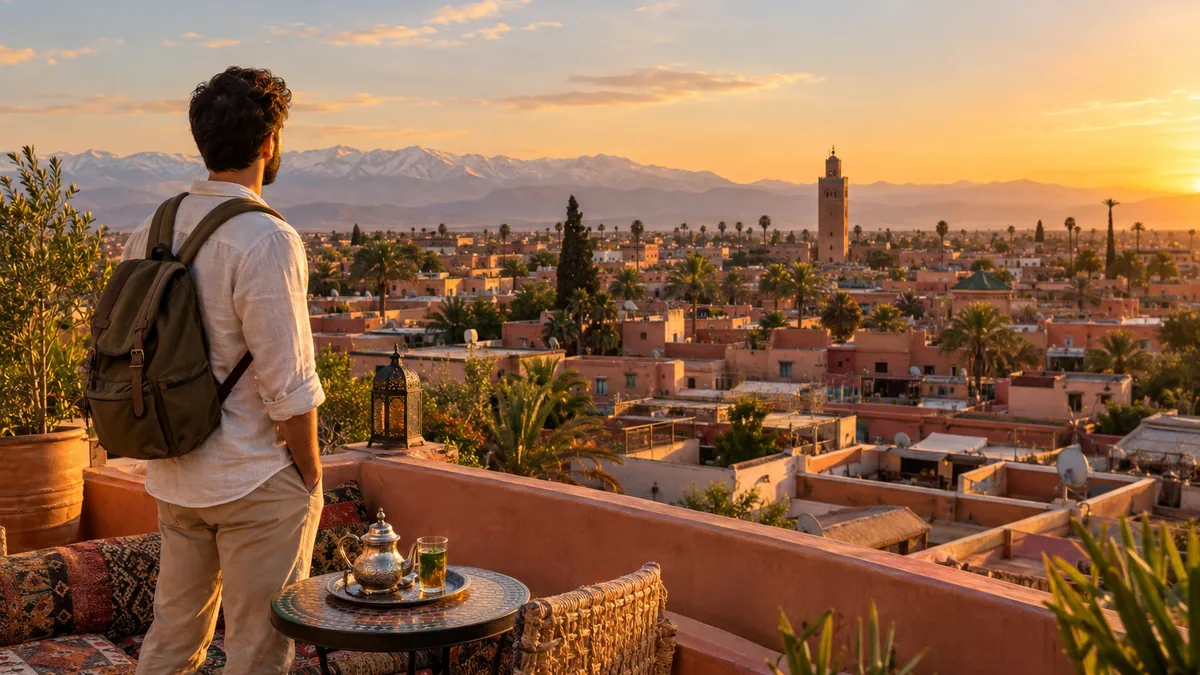
Morocco Travel Guide for First-Time Visitors: Everything You Need to Know
The first time you step into a Moroccan medina, all your senses wake up at once. You hear the call to prayer echo over the rooftops, smell fresh mint and grilled meat in the air, and see narrow alleys packed with colorful carpets, lanterns and spices. It can feel exciting and a little overwhelming.
That is exactly why we wrote this Morocco travel guide for first-time visitors. Below you will find everything you need to plan a smooth first trip: entry rules, the best time to go, how to get around, which cities to visit, what things cost, local customs and a simple 7-day itinerary.
The short answer: Morocco is one of the easiest and most rewarding countries in Africa for first-time travelers. Most Western visitors do not need a visa, the main cities are well connected by train and bus, and a one-week trip can take you from ancient medinas to the Sahara Desert.
Table of Contents
Why Visit Morocco on Your First Trip to Africa?
Morocco is not a small secret anymore. The country welcomed a record 19.8 million tourists in 2025, beating the government’s own target of 18 million, and it kept its place as Africa’s most visited destination, ahead of Egypt.
Here is why so many travelers choose Morocco for their first trip:
- It is close and easy to reach. Many European cities have direct flights, often under four hours.
- The variety is huge. In one trip you can see imperial cities, blue mountain towns, Atlantic beaches, snowy peaks and golden dunes.
- The culture feels completely different, yet the country is well set up for tourists.
- It offers great value, especially compared with a holiday in Western Europe.
Morocco Visa Requirements and Entry Rules
For most readers, entering Morocco is simple. Citizens of the EU, UK, US, Canada, Australia and many other countries can visit visa-free for 90 days with just a valid passport.
A few important details:
- Passport validity: A passport valid for at least six months beyond your arrival date is the safe standard, with at least one blank page for the entry stamp.
- Longer stays: The maximum tourist stay is 90 days, and you can request an extension at the nearest police station.
- Other nationalities: Some passports need a visa or e-visa. Applications for the e-Visa or the Electronic Travel Authorization can be submitted and tracked through the official Acces Maroc portal.
Entry rules can change, so always check the official requirements for your passport before you book.
Best Time to Visit Morocco
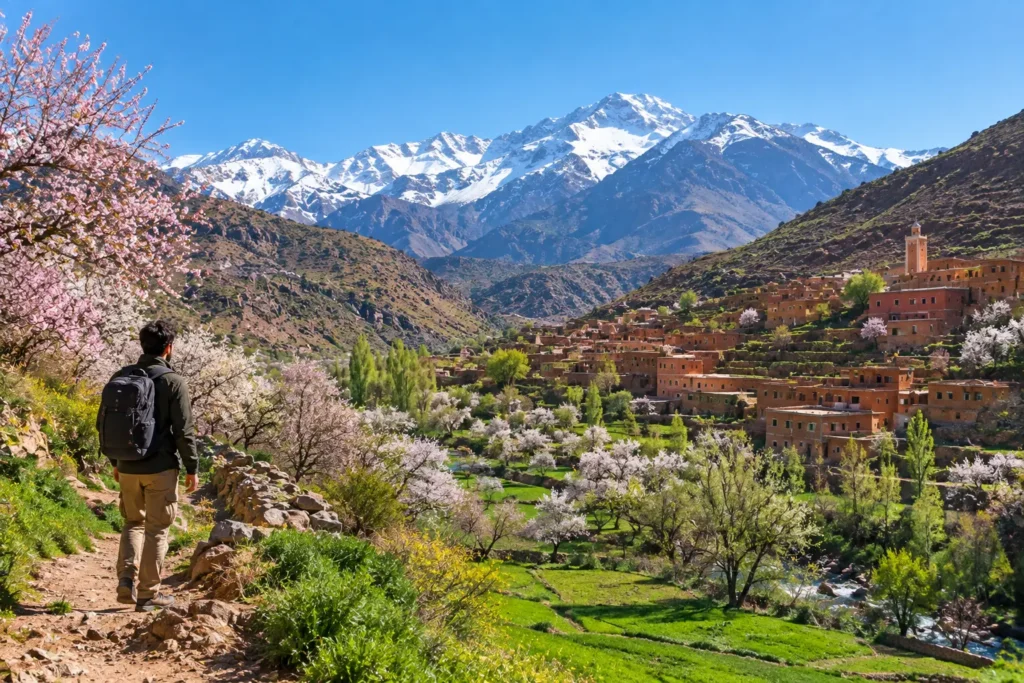
Spring (March to May) and autumn (September to November) are the best all-round times to visit Morocco, with warm days, cool evenings and good conditions for medinas, mountains, the coast and the desert.
Here is a quick breakdown by season:
- Spring (March–May): Pleasant temperatures, green valleys and blooming gardens. One of the most popular times to travel.
- Summer (June–August): Very hot in Marrakesh, Fes and the desert. The Atlantic coast (Essaouira, Agadir, Asilah) stays cooler and is great for beach time.
- Autumn (September–November): Warm, sunny and less crowded than spring. Ideal for a desert trip.
- Winter (December–February): Sunny days but cold nights, especially in the Atlas Mountains and the Sahara. Snow is common in the high mountains.
Ramadan tip: During the holy month of Ramadan, many restaurants close during the day and opening hours change. Traveling is still possible and can be a special experience, but check the dates before you book and plan meals in advance.
How to Get to Morocco
Most visitors fly into Morocco. The main international gateway is Casablanca Mohammed V Airport (CMN), with secondary airports in Marrakech (RAK), Rabat (RBA), Tangier (TNG) and Fes (FEZ).
For a first trip focused on Marrakech and the desert, flying directly into Marrakech usually saves time. If you plan to start in the north (Tangier, Chefchaouen, Fes), Tangier or Fes airports are often more convenient.
You can also arrive by ferry from southern Spain to Tangier, which is a popular option for travelers already touring Andalusia.
Getting Around Morocco
Getting around Morocco is easier than many first-time visitors expect.
By Train
The national rail operator, ONCF, connects most major cities. The highlight is Al Boraq, Africa’s first high-speed train. Since the high-speed section opened, the trip from Tangier to Casablanca takes about 1 hour 30 minutes instead of 4 hours 45 minutes.
The network is growing fast. A new high-speed line between Kenitra and Marrakech is under construction and aims to cut travel time between Tangier and Marrakech to 2 hours 40 minutes, with completion planned for 2029. Until then, regular trains link Casablanca, Rabat, Marrakech, Fes and Meknes.
By Bus
Long-distance bus companies like CTM and Supratours reach cities the train does not, including Chefchaouen, Essaouira, Merzouga and Ouarzazate. They are comfortable, affordable and a good choice for independent travelers.
By Taxi
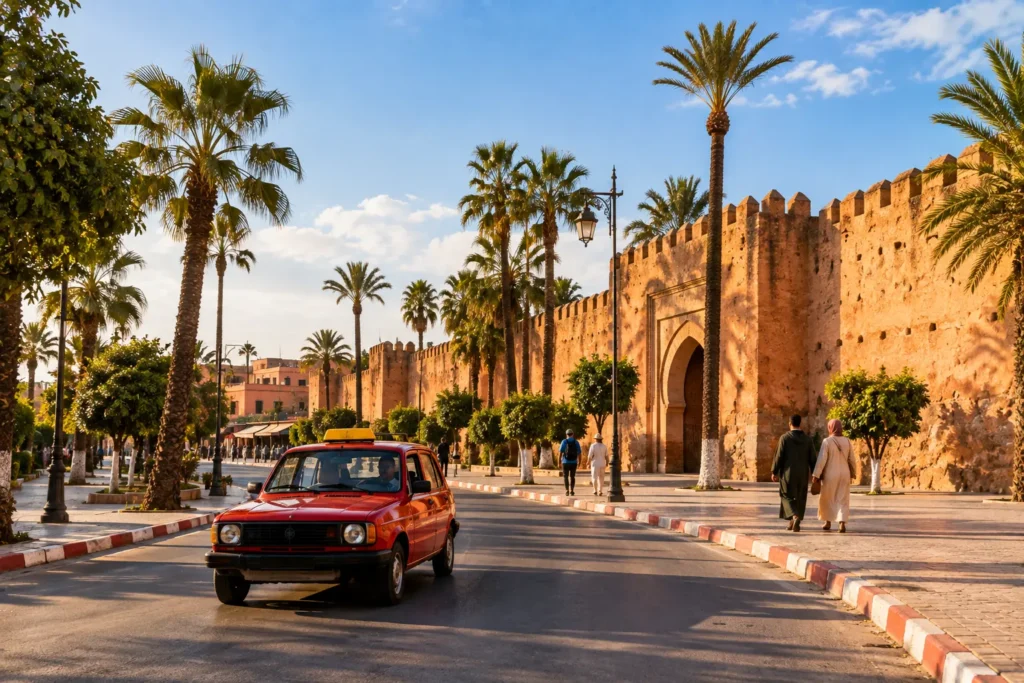
- Petit taxis are small city taxis. Ask the driver to use the meter, or agree on the price before you get in.
- Grand taxis are shared cars that travel between towns. They leave when full and are cheap, but less comfortable.
By Rental Car or Private Driver
Renting a car gives you freedom to explore the Atlas Mountains and the south at your own pace. Main highways are in good condition, but city driving can be stressful. Many first-time visitors prefer a private driver for the desert route.
Every Morocco travel guide for first-time visitors will tell you the same thing: mix trains for long distances with taxis in the cities, and you will save both time and money.
Best Places to Visit in Morocco for First-Timers
Marrakech
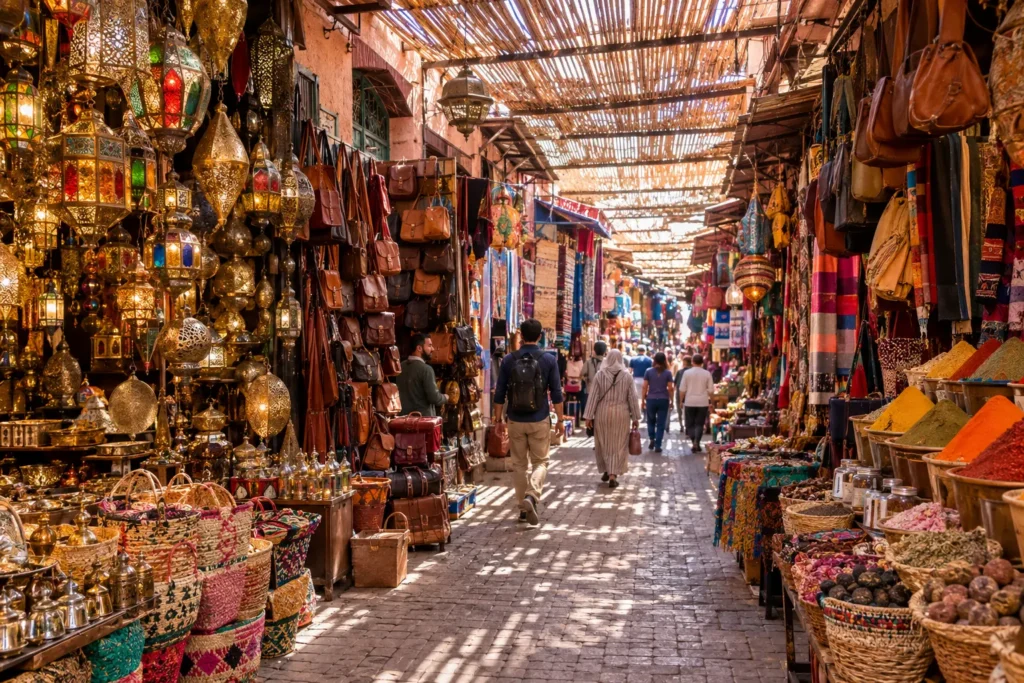
Marrakech is the classic first stop. Wander the souks, watch the evening show in Jemaa el-Fnaa square, and relax in the Majorelle Garden. Stay in a traditional riad inside the medina for the full experience.
Fes
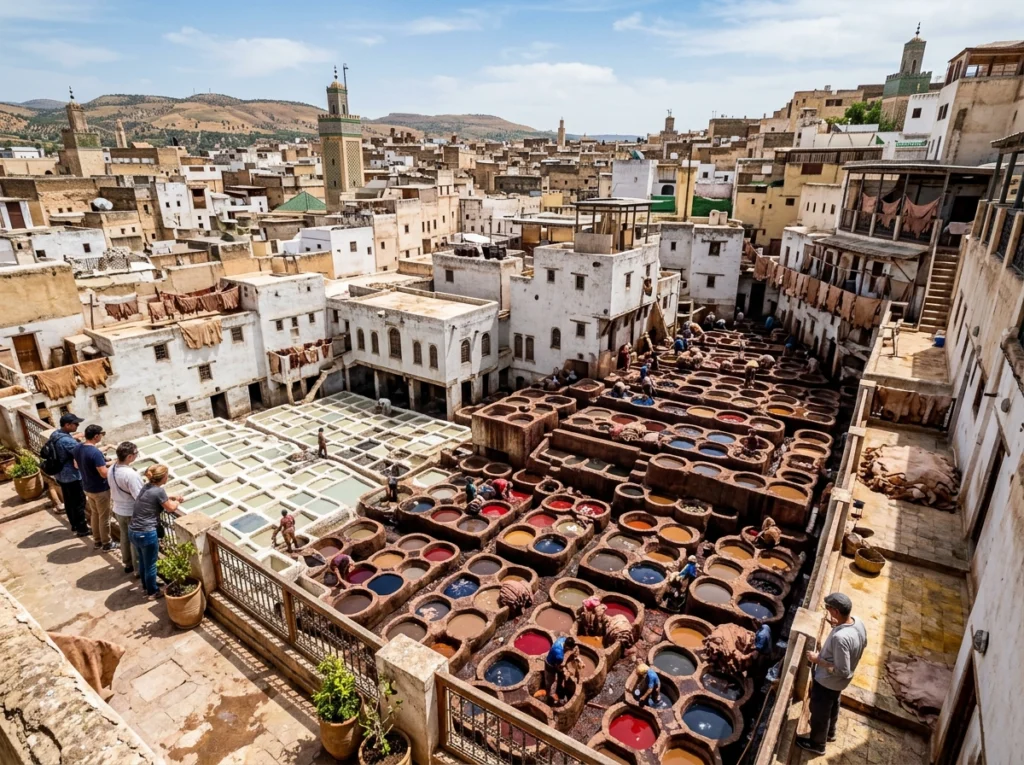
Fes el-Bali is one of the largest car-free medieval medinas in the world. Visit the famous leather tanneries, old madrasas and busy craft streets. Hiring a licensed guide for your first half day helps a lot.
Chefchaouen
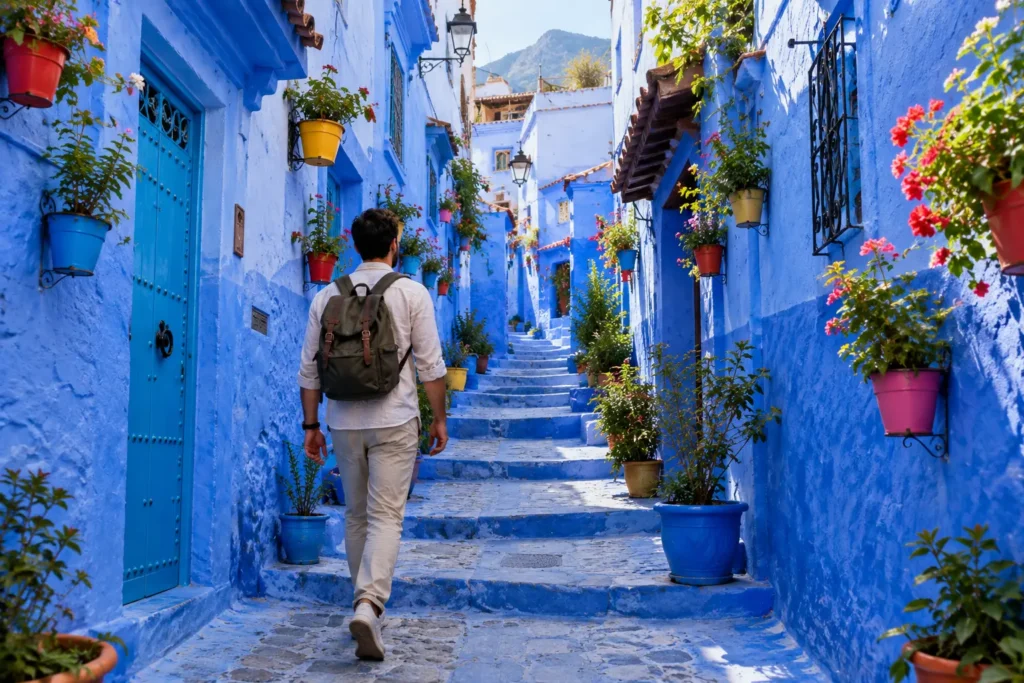
This small town in the Rif Mountains is famous for its blue-painted streets. It is calm, photogenic and perfect for a slower day or two.
The Sahara Desert (Merzouga)
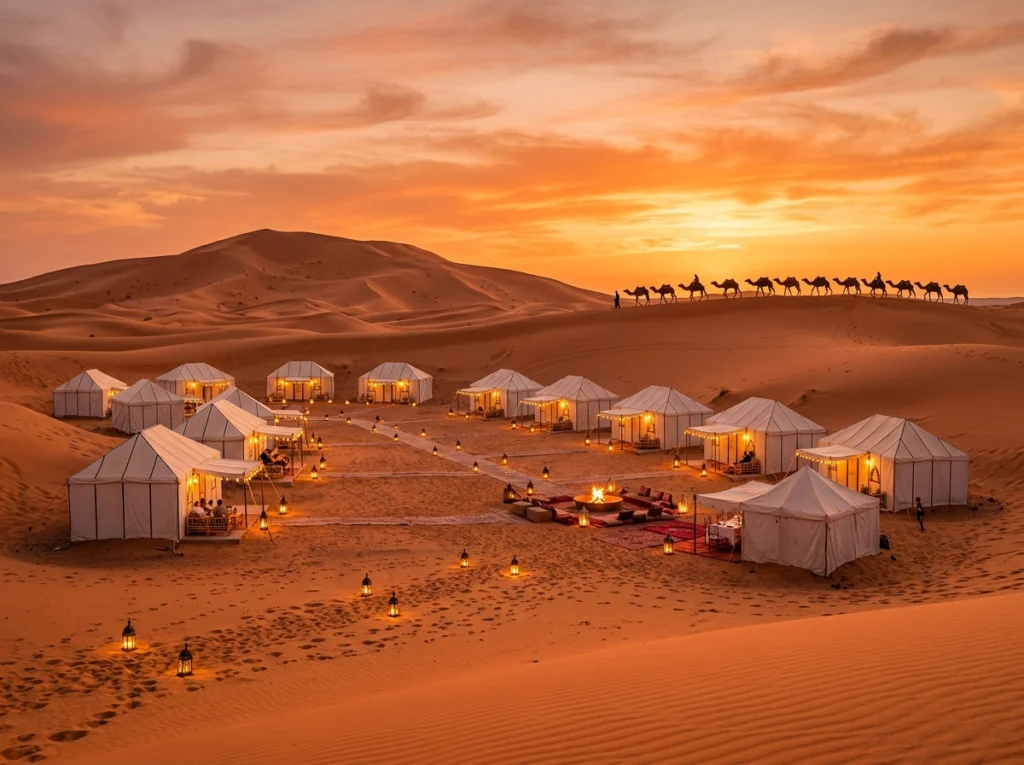
Riding a camel into the dunes of Erg Chebbi and sleeping in a desert camp is a highlight for most visitors. The drive from Marrakech is long, so most people join a 3-day tour.
Essaouira
A relaxed coastal town with a walled medina, fresh seafood and strong Atlantic winds that attract kitesurfers. It is a great break after the busy cities.
The Atlas Mountains
Imlil and the Ourika Valley are easy trips from Marrakech. You can hike through Berber villages, drink tea with local families and enjoy fresh mountain air.
Ait Benhaddou
This fortified clay village near Ouarzazate is a UNESCO World Heritage Site and appears in many famous films and TV series. It is usually part of the desert tour route.
Simple 7-Day Morocco Itinerary for First-Time Visitors
- Day 1–2: Marrakech. Explore the medina, souks, Bahia Palace and Jemaa el-Fnaa.
- Day 3: Marrakech to the desert. Cross the Atlas Mountains via the Tizi n’Tichka pass and stop at Ait Benhaddou.
- Day 4: Merzouga. Camel ride at sunset and a night in a desert camp.
- Day 5: Merzouga to Fes. A long but scenic drive through the Middle Atlas.
- Day 6: Fes. Guided tour of the medina and tanneries.
- Day 7: Chefchaouen or departure. Take a day trip or relax before your flight.
If you have fewer days, focus on Marrakech plus a day trip to the Atlas Mountains or Essaouira.
How Much Does a Trip to Morocco Cost?
Morocco can work for almost any budget. Your main costs will be accommodation, tours, transport and food.
- Budget travelers can save by staying in hostels or simple riads, eating local food and using buses and trains.
- Mid-range travelers usually stay in comfortable riads inside the medina and book a group desert tour.
- Luxury travelers can enjoy boutique riads, private drivers and high-end desert camps.
Prices change with the season and exchange rates, so check current rates when you plan.
Money tips:
- The local currency is the Moroccan dirham (MAD). You generally cannot get it before you arrive, so plan to withdraw cash at an airport or city ATM.
- Carry cash for markets, taxis and small restaurants. Many small places do not accept cards.
- Keep some small notes and coins for tips and small purchases.
Morocco Travel Tips: Culture and Etiquette
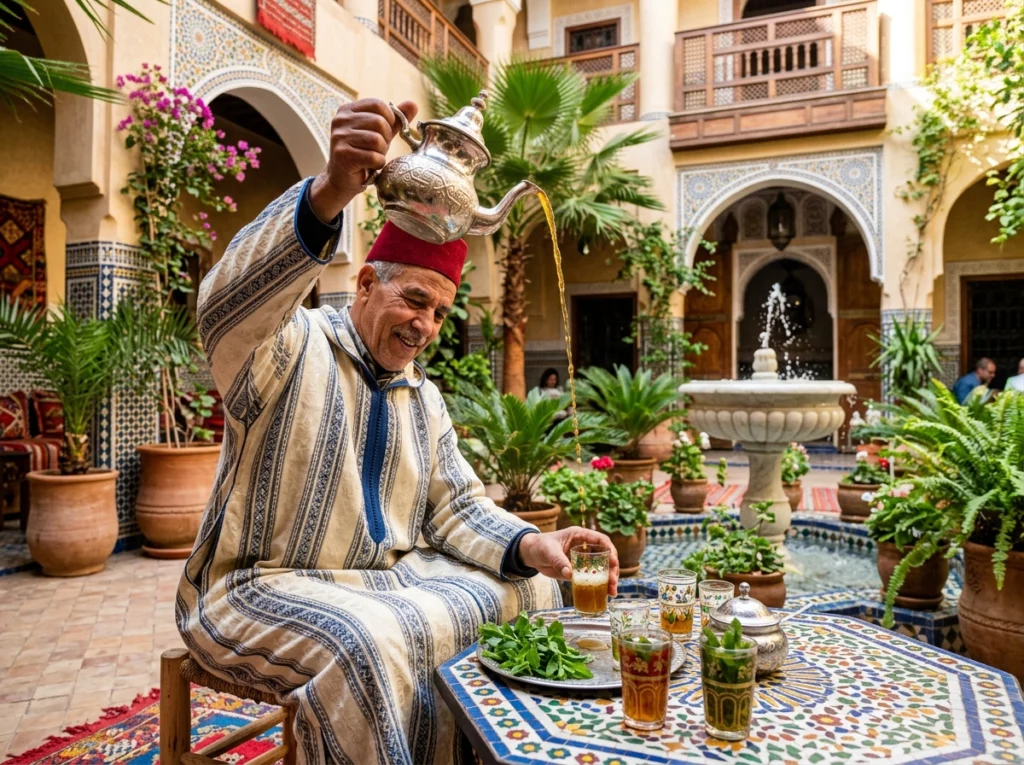
Knowing a few local customs will make your first trip to Morocco much smoother.
- Dress modestly, especially outside tourist areas. Covering shoulders and knees is respectful for both men and women.
- Learn a few words. “Salam” (hello) and “shukran” (thank you) go a long way. French is also widely spoken.
- Haggling is normal in the souks. Stay friendly, start lower than the first price and walk away politely if it doesn’t feel right.
- Ask before taking photos of people. Some will ask for a small tip.
- Non-Muslims generally cannot enter active mosques, with the notable exception of the Hassan II Mosque in Casablanca, which offers guided tours.
- Tipping is common in restaurants, for guides, drivers and hotel staff.
Is Morocco Safe for First-Time Visitors?
Morocco is generally considered a safe destination for tourists, and millions visit every year without problems. The most common issues are small scams and pushy behavior in busy tourist areas, not serious crime.
Safety tips for your first trip:
- Politely ignore people who offer to “show you the way.” Use offline maps or ask your riad for directions.
- Use licensed guides booked through your hotel or a trusted tour company.
- Keep your phone and wallet secure in crowded medinas and markets.
- Agree on prices before any service, whether it is a taxi, henna or a photo with an animal.
- Drink bottled water if you have a sensitive stomach.
- Check your government’s latest travel advice before departure.
Frequently Asked Questions
How many days do you need in Morocco for a first trip?
Seven to ten days is ideal. It gives you time for Marrakech, the Sahara Desert and Fes without rushing. With only 4–5 days, focus on Marrakech plus one day trip.
Do US and UK citizens need a visa for Morocco?
No. US, UK, EU, Canadian and Australian passport holders can visit visa-free for up to 90 days. Your passport should be valid for at least six months.
What is the best month to visit Morocco?
April, May, October and November are usually the best months, with warm days and cool nights across most regions.
What language do they speak in Morocco?
Arabic and Amazigh (Berber) are the official languages. Moroccan Arabic (Darija) is spoken daily, and French is widely used. English is common in tourist areas.
Can you use credit cards in Morocco?
Hotels, larger restaurants and shops usually accept cards, but cash is essential in souks, taxis, small cafes and rural areas.
Morocco Travel Guide for First-Time Visitors: Final Tips
Your first visit to Morocco will be full of color, flavor and unforgettable moments, from sipping mint tea on a riad rooftop to watching the sun rise over the Sahara. With the right planning, it is one of the most rewarding trips you can take.
Use this Morocco travel guide for first-time visitors to choose your route, book your riads and plan your desert adventure. Then explore our city guides for Marrakech, Fes and Chefchaouen, and start planning your trip to Morocco today.